U.S. Middle East travel warning urges Americans to reconsider trips
The State Department says Americans should reconsider travel to and through the Middle East and prepare for flight and airspace disruptions.
By Jordan Bell · Startups & Deals Reporter
· 3 min read
The U.S. Middle East travel warning tells Americans outside the region to reconsider trips to or through it, while urging those already there to stay alert for cancelled flights, airspace closures and other disruptions. For travelers, the immediate takeaway is to verify flight plans directly with airlines and watch for destination-specific security updates.
The State Department’s official Worldwide Caution page, dated July 22, 2026, says heightened tensions have created a complex security situation that could worsen without warning. The department advised Americans worldwide to use increased caution.
On Sept. 20, CNBC and Anadolu separately reported that the department had repeated similar guidance in a social-media post, saying the conflict could escalate rapidly. The underlying September post was not included in the available official materials, and the State Department’s published Worldwide Caution page remains dated July 22.
What does the U.S. Middle East travel warning mean for travelers?
It is not a blanket order directing Americans to avoid every destination in the region. The guidance says to reconsider travel, meaning travelers should weigh the security and transportation risks before departing and check the separate advisory and recent alerts for their specific destination.
For Americans currently in the Middle East, the department advises heightened vigilance. It says travelers should be ready for flight cancellations, periodic airspace closures and broader travel interruptions. Some airlines had deferred planned schedule resumptions, while others had cancelled routes, according to the July notice.
What travelers should do now
- Confirm directly with the airline that a flight remains scheduled.
- Contact the carrier for rebooking or change information if a flight is affected.
- Monitor U.S. embassy and consular security alerts, as well as breaking news.
- Follow instructions from local authorities.
- Review destination-specific advisories and alerts at the State Department’s travel website, and enroll in the Smart Traveler Enrollment Program for security updates.
The State Department said U.S. diplomatic facilities, including some outside the Middle East, had been targeted. It also warned that Iran and groups supporting it could target U.S. interests abroad or places associated with Americans, including businesses and other institutions.
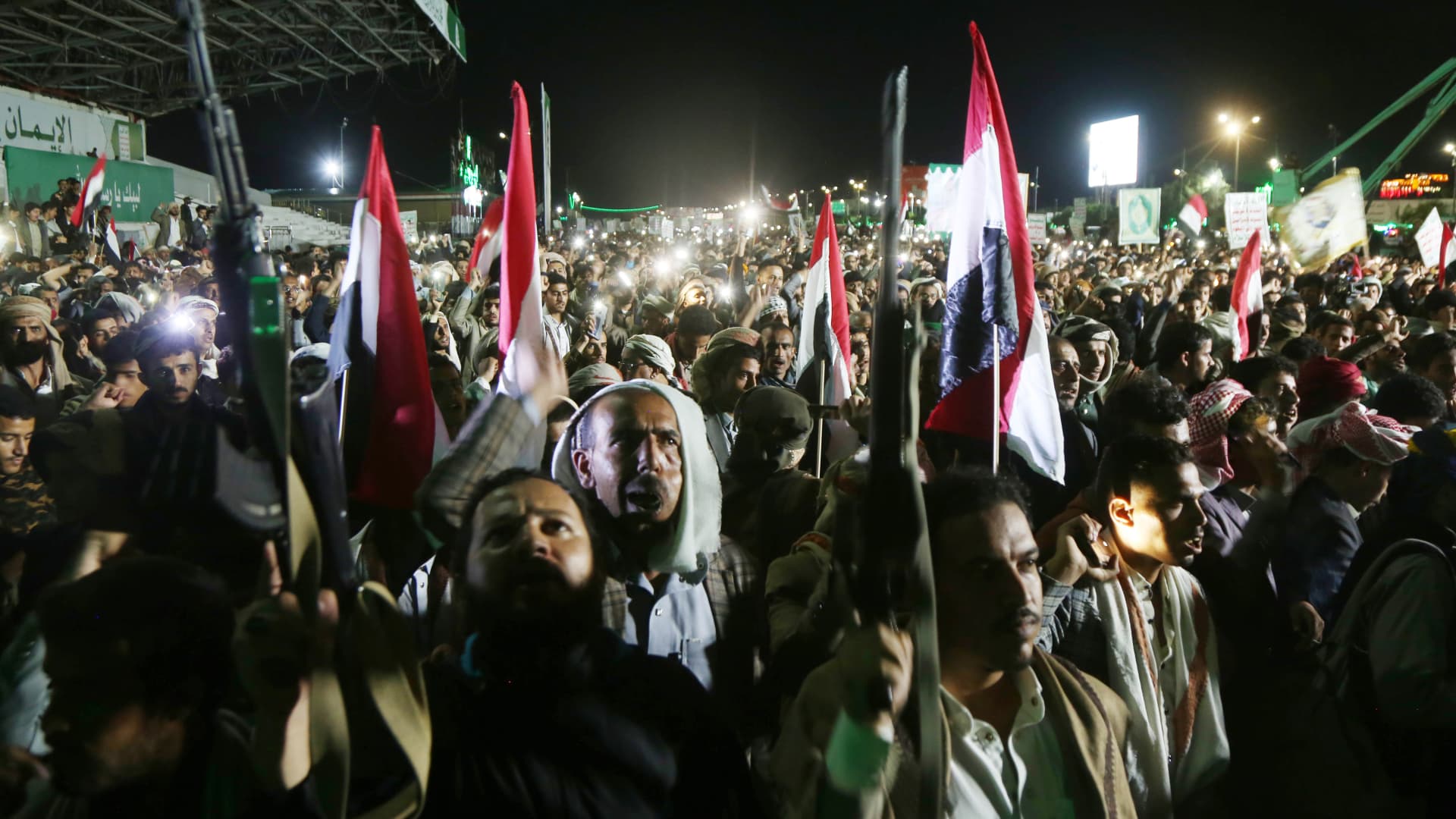
The reported September warning came amid heightened regional tensions. CNBC reported that Iran-backed Houthi forces said they had attacked sites in Riyadh, Saudi Arabia, while local authorities had not identified the cause of flames and smoke seen near the city’s main airport. CNBC also reported that U.S. embassies in the region issued security alerts because of the risk of an unforeseen escalation.
Travel conditions can change quickly when airspace restrictions or airline operating decisions shift. The State Department advises people traveling to or from the region to keep monitoring airport and airline information rather than relying on an earlier itinerary.
This story draws on original reporting from CNBC.