Bessent says Nvidia H200 China export policy is unchanged after Xi talks
Treasury Secretary Scott Bessent said the H200 policy remains in place, while Commerce’s rules still require case-by-case export license reviews.
By Maya Okafor · Markets Writer
· 2 min read
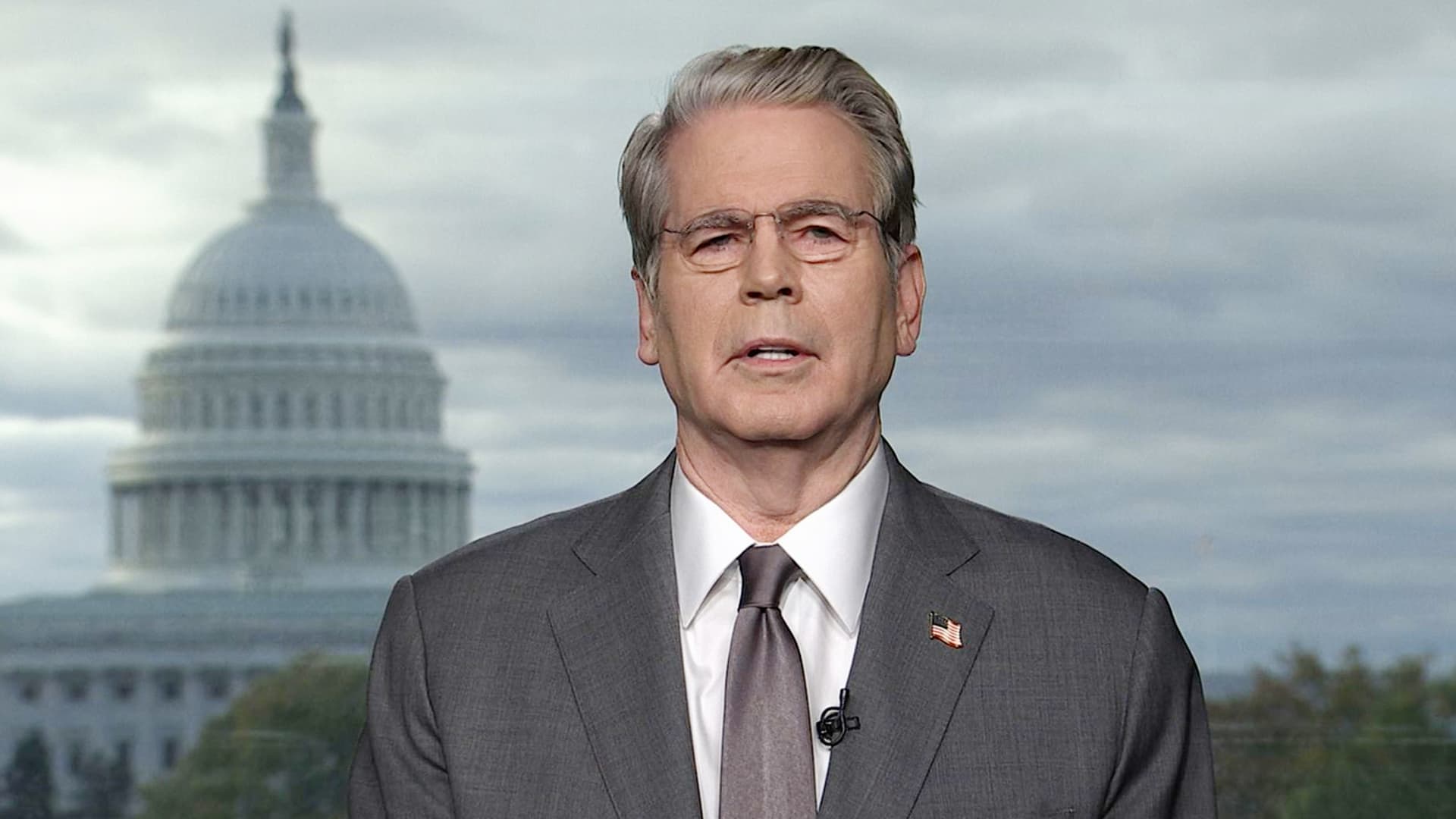
Treasury Secretary Scott Bessent said the Nvidia H200 China export policy has not changed after President Donald Trump’s talks with Chinese leader Xi Jinping. For investors following chip-export rules, the key distinction is that Bessent’s comments describe the administration’s stated position, while the operative framework remains a conditional, case-by-case licensing process run by the Commerce Department.
Speaking to CNBC on Nov. 20, Bessent said H200 chips remained the threshold level that could be sold to Chinese buyers and that the arrangement would continue as planned. Asked whether he expected a policy shift, he said he did not.
The remarks came after Trump said at a White House press conference that he had discussed Jensen Huang with Xi, and that Xi called Huang “brilliant,” according to CNBC. Earlier, Bessent had answered no when asked whether Huang came up in his own conversations with Chinese officials.
A senior Trump administration official told CNBC that both statements were accurate because Trump and Bessent were referring to separate conversations.
What does the Nvidia H200 China export policy allow?
Commerce’s Bureau of Industry and Security set out the formal rules in January. The agency said applications to export Nvidia H200 chips, AMD MI325X chips and similar products to China would receive case-by-case review, rather than blanket approval.
Applicants must meet specified security conditions. According to BIS, they must show that an export would not reduce semiconductor production capacity available to U.S. customers. The Chinese purchaser must have export-compliance procedures, including customer screening, and the product must undergo independent third-party testing in the United States for performance and security.
That means Bessent’s statement does not itself establish that every proposed H200 transaction will be approved, or confirm the status of any particular license. The Commerce rule is the governing framework, and it applies conditions to individual applications. Readers can review BIS’s January licensing-policy announcement for the stated requirements.
Bessent also said the administration was working to ensure chip restrictions were in place and that remote access had been curtailed, CNBC reported. That issue is covered separately from physical shipments: BIS issued an interim rule on Nov. 16 aimed at remote access to advanced chips and servers, including through computing arrangements involving data centers in third countries.
For Nvidia investors, the latest comments point to continuity in the administration’s public position on H200 licensing. Any change to the legal terms of chip exports would require attention to Commerce Department action, not only remarks following diplomatic talks.
This story draws on original reporting from CNBC.