Samsung and SK Hynix university programs draw more applicants in South Korea
Company-linked degrees are attracting more students, but the route to a job differs sharply between SK Hynix and Samsung programs.
By Theo Nakamura · Staff Writer
· 3 min read
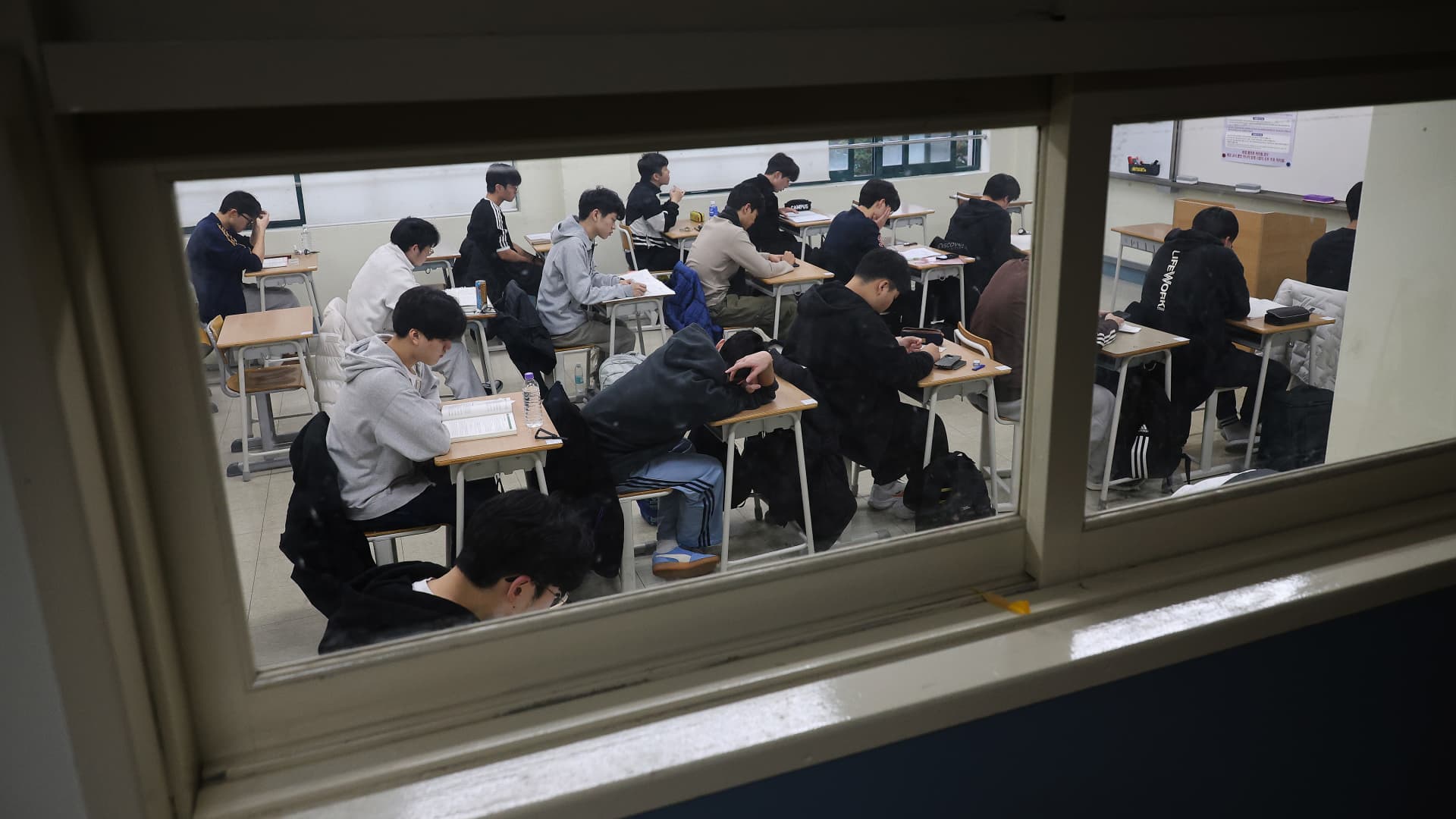
Applications to Samsung SK Hynix university programs are rising in South Korea, giving students a more structured route into semiconductor and software careers. The fine print matters for students and investors watching the companies’ talent pipelines: an industry-linked degree can include funding and recruitment access, but it does not automatically mean the same job guarantee at every school.
South Korean universities call these arrangements “contract departments.” Companies help shape coursework, contribute financial support and establish employment paths for students who meet the stated conditions, CNBC reported. The structure is designed to connect university training with a company’s future hiring needs.
How do Samsung and SK Hynix university programs work?
The SK Hynix-linked program at Sogang University is the more direct example. Its Department of System Semiconductor Engineering is a four-year degree, and CNBC reported that students who satisfy academic requirements are guaranteed employment at the memory-chip maker after graduation.
All admitted students receive an SK Hynix scholarship, according to CNBC, including tuition coverage. Student Jung Chae-rin told CNBC she also receives a monthly study incentive of about 300,000 won. Jung said students need a 2.3 grade-point average to retain the scholarship and a 2.7 GPA to qualify for employment, thresholds reported as her account rather than a university-wide rule cited directly by the school.
The funding carries a commitment. Jung said students who leave the course must repay support they received. SK Hynix said graduates must work at the company for a period equal to their financial-support period. The company added that these recruits enter at the same rank and with the same base pay and benefits as other entry-level university hires.
Samsung’s arrangement at Sungkyunkwan University, known as SKKU, works differently in the example reported by CNBC. The Department of Intelligent Software is a five-year combined bachelor’s and master’s course created with Samsung Electronics. Tuition is covered for the first three years when students meet requirements, but they must enter a separate Samsung hiring process beginning in the latter half of their third year. Employment is confirmed only after they pass, and continuing full tuition support for the rest of the program depends on that result.
The SKKU course began in 2024, and its first class had not yet graduated when CNBC reported on it. That distinction is central: a corporate partner can provide a hiring channel without committing to hire every graduate.
Competition is increasing across admissions cycles
Jongro Academy data reported by CNBC showed applications in the 2026 regular-admission cycle rose 6.5% for Samsung Electronics-linked contract departments and 12.7% for SK Hynix-linked programs. The reported applicant-to-seat ratios were 13.44-to-1 for Samsung courses and 9.14-to-1 for SK Hynix courses.
A separate early-admissions dataset for the 2027 academic year showed the trend continuing. Seoul Economic Daily reported that 8,994 students applied to 13 company-linked programs, up 18.2% from a year earlier. Five semiconductor programs received 5,992 applications, with 28.53 applicants per seat. Those figures are from Jongro Academy, not official national admissions statistics.
The partnerships extend beyond the two case studies. CNBC identified SK Hynix links with Korea University and Hanyang University, while Samsung collaborations include Yonsei University, KAIST and UNIST. Their benefits and hiring rules should not be assumed to match those at Sogang or SKKU.
A separate proposed regional semiconductor program involving Samsung, SK Hynix, Seoul National University and regional institutions was still under review by South Korea’s Education Ministry as of July 2, according to Aju Press. It was not yet an operating program.
This story draws on original reporting from CNBC.