Shenzhen’s hardware cluster keeps pulling in U.S. tech startups
Former Apple employees and investors told CNBC that Shenzhen’s supplier network still gives China an edge in consumer tech and robotics hardware.
By Dev Ramirez · Crypto Correspondent
· 4 min read
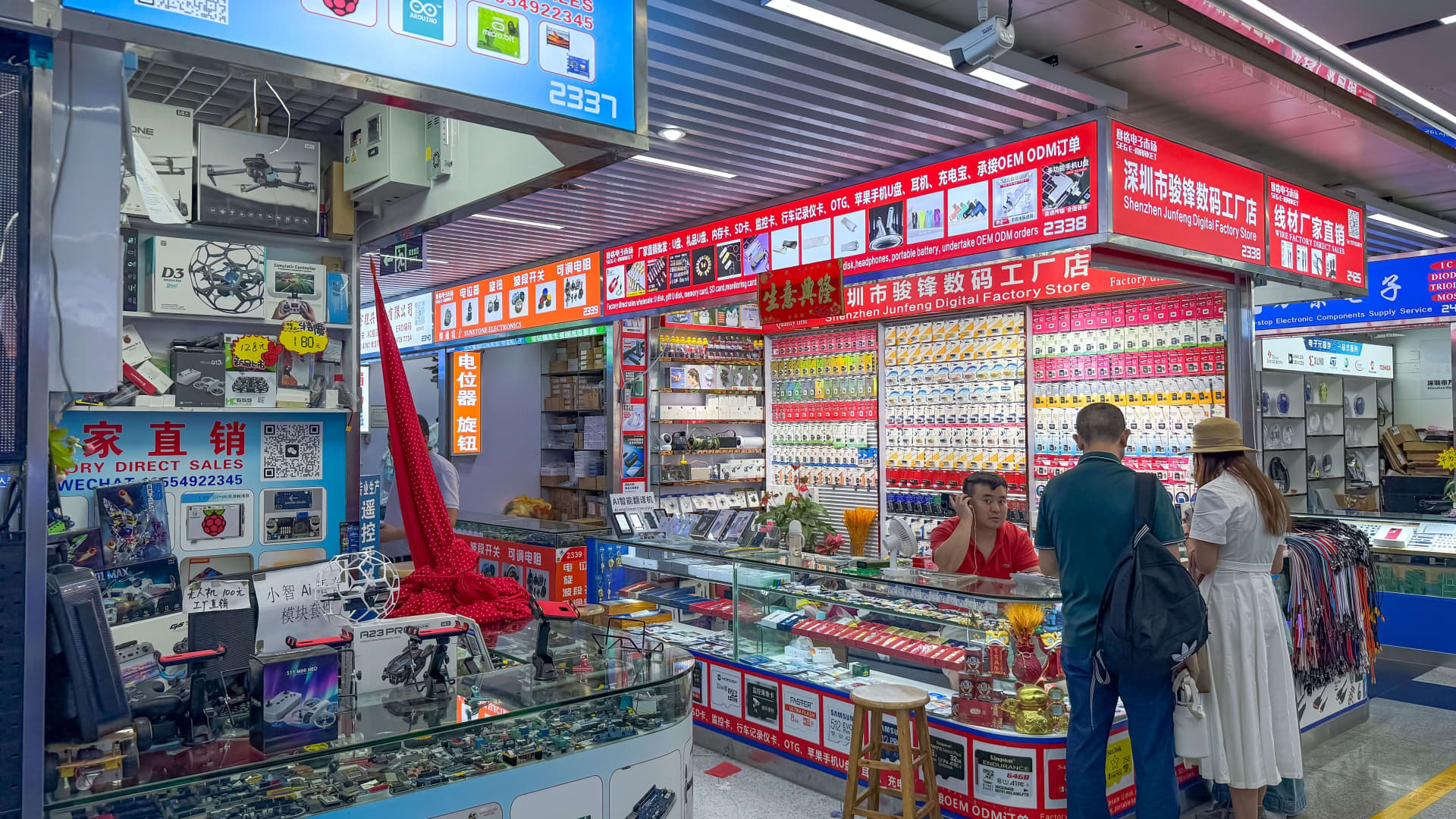
Shenzhen is still hard to ignore for hardware startups, even as tariffs and geopolitics push companies to rethink where they build. For everyday investors, the takeaway is direct: the next wave of gadgets, AI devices and robots may still depend heavily on Chinese manufacturing networks.
CNBC reported that Joshua Woodard, an MIT graduate and former Apple employee, left the iPhone maker to run The Sparrows, a supply chain management company based in Shenzhen. A supply chain is the network of factories, parts makers and logistics providers that turn an idea into a physical product.
Woodard told CNBC that many of The Sparrows’ customers are from the United States, including companies working on new smartphone designs and new ways to use artificial intelligence. He argued that other manufacturing hubs, including India and Vietnam, are not close to matching China’s role for companies that need to build physical products.
Shenzhen’s advantage comes from density. Apple established a major manufacturing base in the city more than 20 years ago through supplier Foxconn, according to CNBC. The region is now home to major consumer electronics names including DJI and Huawei, as well as electric vehicle maker BYD.
Will Wang, CEO of smart-glasses startup Even Realities and another former Apple employee, told CNBC that companies in Shenzhen can reach much of the needed supplier base within about a two-hour drive. Wang said on CNBC’s “The China Connection” that a company trying to build the future of consumer electronics should be close to the center of hardware manufacturing.
Why the location still matters
The practical benefit is speed and cost. Woodard told CNBC that operating in Shenzhen rather than the U.S. can reduce costs by about two-thirds and shorten prototype work from weeks to days. A prototype is an early version of a product used for testing before mass production.
That speed matters in consumer tech because companies often need to test designs, change components and get feedback before launching. Woodard also said developers gain from working with suppliers that have years of experience making parts such as display panels.
Trade data show how closely California’s tech economy remains tied to Asia’s manufacturing base. China was California’s largest source of imports last year, even after a sharp year-over-year drop tied to higher U.S. tariffs, according to the California Chamber of Commerce. Taiwan and Mexico ranked next, followed by Vietnam. Computer and electronic products made up about 36% of California’s imports, the chamber said.
Shenzhen also remains central to China’s own export machine. CNBC, citing calculations from official data accessed through Wind Information, reported that Shenzhen was China’s second-largest city by overall exports and accounted for nearly 19% of the country’s advanced technology exports last year.
The case for spreading production around
Some investors and companies still see risk in concentrating manufacturing in China. Fady Saad, a Boston-based general partner at Cybernetix Ventures, told CNBC that robotics companies should start with the customer use case and stay close to end users. He said the firm’s portfolio companies use some Chinese parts, but Cybernetix has advised them to maintain multiple supply chain plans.
Agility, a U.S. robotics company, told CNBC that 75% of its components come from America and 1% come from China. CNBC said Figure and Boston Dynamics did not immediately respond to requests for comment.
China’s role is also shifting into newer hardware categories. Lian Jye Su, chief analyst at Omdia, told CNBC that Chinese suppliers are becoming more relevant in specialized technologies and dominate the hardware behind humanoid robotics. He added that traditional robot makers still rely more on components from Japan, Germany, Switzerland, South Korea and the U.S.
Nvidia announced last month that it is working with China’s Unitree as part of its push into physical AI, CNBC reported. Physical AI refers to artificial intelligence systems used in machines that act in the real world, such as robots.
Annabelle Yu Long, founding and managing partner of BAI Capital in Beijing, told CNBC that efforts to diversify supply chains away from China have slowed, with companies continuing to rely on China for innovation efficiency.
This story draws on original reporting from CNBC.