Supreme Court lets White House ballroom construction continue during lawsuit
The court’s 5-4 order keeps Trump’s ballroom project moving while the justices leave its legality unresolved.
By Maya Okafor · Markets Writer
· 3 min read
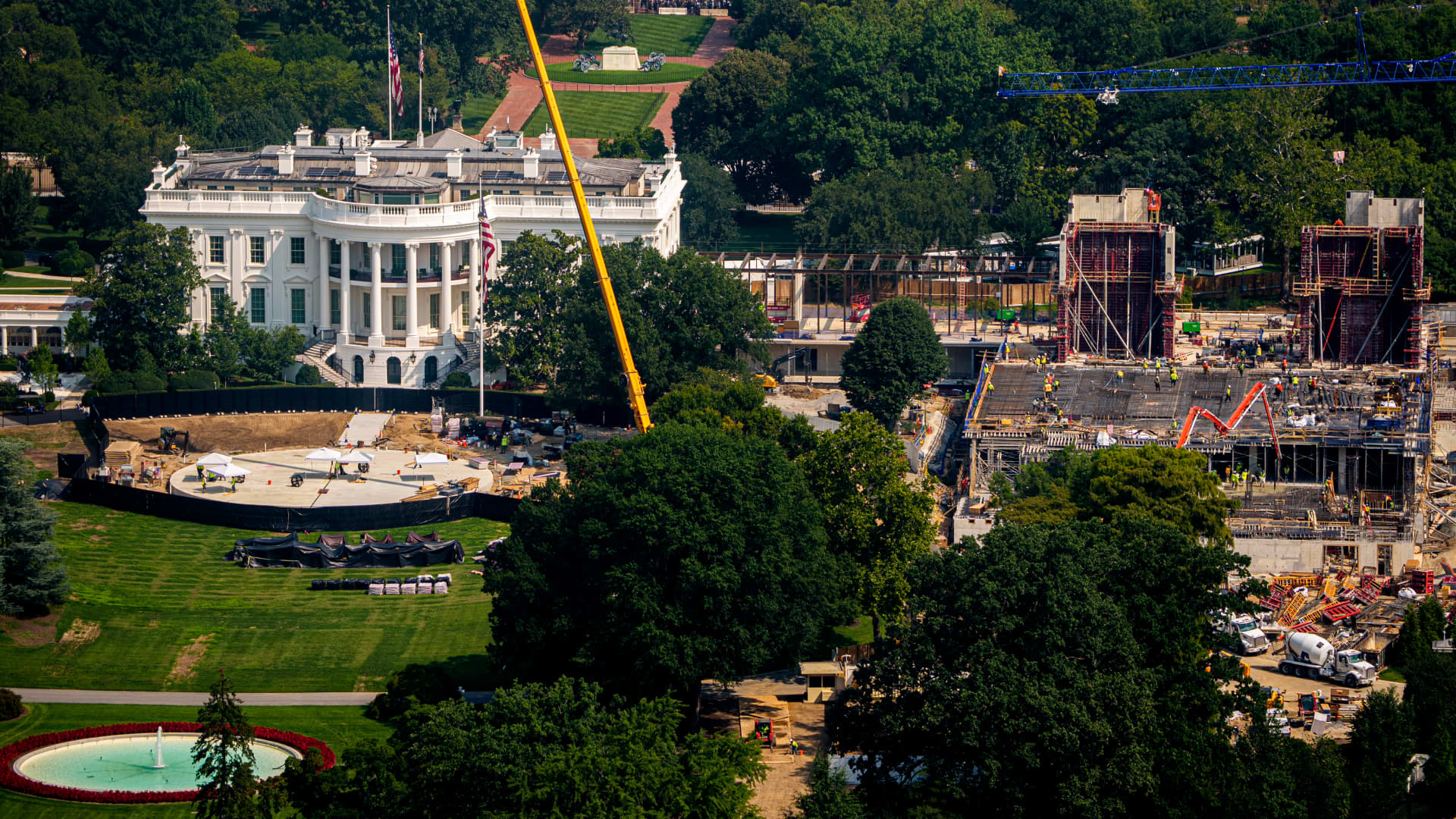
The Supreme Court has allowed construction on President Donald Trump’s White House ballroom to continue while a preservation group’s lawsuit proceeds. For readers following the Supreme Court White House ballroom case, the 5-4 order removes, for now, a lower-court restriction on above-ground work, but it does not settle whether the project itself is legal.
Reuters reported that the court granted the administration’s request to block an order that would have stopped most above-ground construction. The order concerns interim relief, meaning it determines what can happen during the case rather than delivering a final judgment on the underlying dispute.
Did the Supreme Court rule the White House ballroom is legal?
No. The court did not decide whether demolishing the East Wing and building the ballroom required congressional approval, according to NPR. Instead, the majority indicated that the National Trust for Historic Preservation, which brought the case, is likely to lack the legal right, known as standing, to seek an injunction against the project.
Standing requires a plaintiff to show a sufficiently concrete injury that a court can address. CNBC and NPR reported that the majority’s view on the trust’s standing was central to its decision to allow construction to proceed during the litigation.
Chief Justice John Roberts dissented, joined by Justices Sonia Sotomayor, Elena Kagan and Ketanji Brown Jackson. The dissent said the construction was likely unlawful, CNBC reported.
How the construction dispute reached the court
The National Trust sued after the administration demolished the East Wing and began work on a planned 90,000-square-foot ballroom without seeking specific approval from Congress, Reuters reported. The group contends that the administration lacks authority to build the project without express congressional authorization. The administration disputes that view.
In March, U.S. District Judge Richard Leon issued an order barring most above-ground construction. His order still permitted below-ground work and activity considered strictly necessary for White House safety and security. The U.S. Court of Appeals for the District of Columbia Circuit upheld that ruling by a 2-1 vote on Aug. 7, according to Reuters.
That halt did not take effect. On Aug. 21, Roberts issued an administrative stay, a temporary pause that gave the full court time to consider the government’s request. The Aug. 31 ruling is the later decision that keeps the lower-court restriction blocked while the lawsuit continues.
What is known about the project’s cost and funding?
Reuters has described the ballroom as a $400 million project. The Justice Department told the court in an Aug. 14 filing that the combined East Wing project was 65% complete.
Funding remains unclear in the supplied reporting. NPR reported an estimate that taxpayers could pay at least $300 million, despite Trump’s repeated statements that taxpayers would not cover the cost. Those figures cannot be reconciled from the available reporting.
The administration has described the development as an integrated military complex and said it includes secure underground facilities alongside the ballroom. Those are the administration’s claims in court filings, not findings made by the Supreme Court. The legal challenge remains pending, and the reporting does not establish a timetable for a final ruling.
This story draws on original reporting from CNBC.