Dreame scrutiny tests China’s state-backed tech funding model
China is tightening oversight of local government tech funds as scrutiny of Dreame highlights risks in state-led startup investing.
By Sofia Marchetti · Columnist
· 4 min read
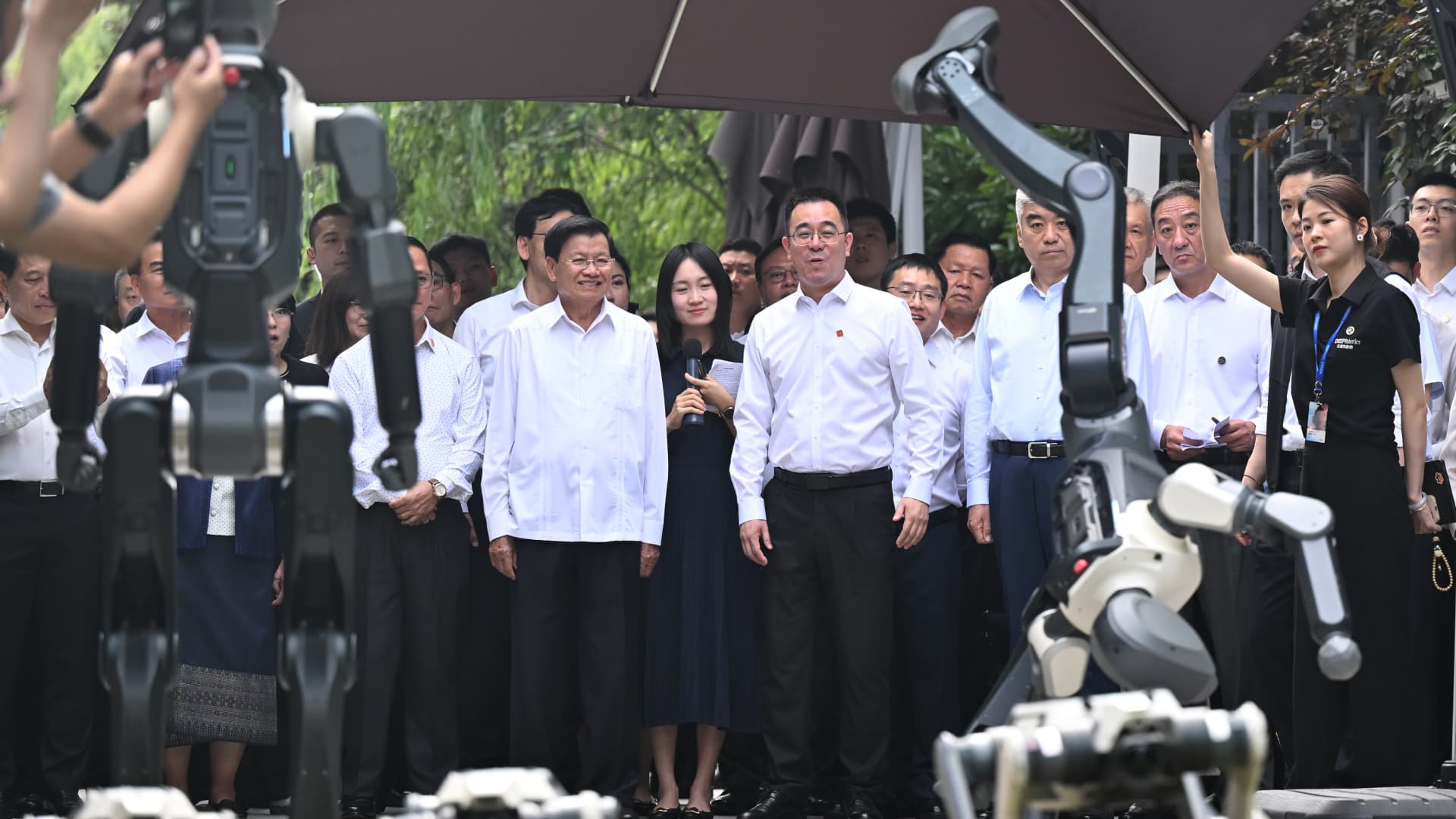
China’s push to bankroll homegrown tech champions is running into a governance problem, and the Dreame Technology case shows why investors should care. When public money props up startups through direct stakes, weak oversight can turn a growth story into a fiscal and market-risk story fast.
A city government in Jiangsu province recently asked local companies to review and disclose their financial exposure to entities linked to Dreame, the robot vacuum maker, according to state-backed media cited by CNBC. Around the same time, China’s State Council issued new rules to tighten supervision of the country’s private fund industry, which official figures put at 23 trillion yuan, or about $3.4 trillion.
The timing put a spotlight on a funding model China has used to chase U.S. tech leadership. In the U.S., government support often flows through tax breaks, grants and procurement contracts. In China, governments at different levels frequently invest directly through state capital and so-called guidance funds, which are public-backed investment vehicles meant to steer money into priority industries.
Dreame’s rapid expansion draws attention
Dreame ranked as the world’s largest robotic vacuum maker by sales in the first quarter, according to research consultancy IDC. The company, founded in 2017, has also expanded far beyond home-cleaning hardware.
State-backed media reported that Dreame has developed nearly 1,000 affiliated companies across areas including electric vehicles, smartphones, humanoid robots, bubble tea and satellite networks. Founder Yu Hao said in January that he wanted to build an ecosystem that would become the “first $100 trillion company in human history,” according to Chinese media outlet CLS.
That expansion has been fueled in large part by state-linked capital. State-backed media reported that Dreame’s Sky Factory Venture Capital Fund manages 41.6 billion yuan in assets, with roughly 80% coming from local government industry funds in cities including Suzhou and Xiamen. Nearly all of its 29 funds reportedly include local state-owned capital and span more than 10 cities.
Yu’s Weibo account was suspended, according to state-linked media. CNBC reported that China’s State Council, the Changzhou municipal government and Dreame did not respond to requests for comment.
Beijing tightens the rules
Dan Wang, China director at Eurasia Group, told CNBC that local governments have used equity finance as an alternative to land financing, a revenue model that weakened after China’s property crisis in the early 2020s. Equity finance means governments buy ownership stakes, hoping gains from successful companies can support local budgets.
Wang said local authorities often compete to spend heavily on favored sectors, creating fiscal waste and credit risks for the central government. He added that local officials may lack the tools professional investors use to judge projects, leaving public finances exposed when bets fail.
The State Council’s new guideline calls for strict control over the creation of new government investment funds and bars counties and districts from launching new funds without approval from higher authorities, according to China Daily. Bob Chen, a Shanghai-based investor in a yuan-denominated fund, told CNBC the rules shift oversight upward to city and provincial officials.
The changes come as Wall Street-linked U.S. funds have pulled back from China in recent years because of geopolitical risk, CNBC reported. That has left more room for local yuan-denominated funds to supply capital.
The upside and the waste
Tilly Zhang, an industrial policy analyst at Gavekal Dragonomics, told CNBC that “patient capital” can help startups in uncertain, long-term technology fields. Patient capital refers to money invested with a longer time horizon than typical venture funding.
Zhang said the model can also encourage companies to present themselves as aligned with government priorities to win funding. She pointed to a loss-making semiconductor project in Wuhan in 2021 that cost the government around 15 billion yuan.
Rhodium Group research found that local Chinese governments created thousands of guidance funds over the past decade, often leading to duplicated investments and wasted capital. By the end of 2025, China had more than 2,100 government guidance funds with target capital above 11 trillion yuan, according to official figures cited by Chinese media.
Yuen Yuen Ang, a political economy professor at Johns Hopkins University, told CNBC that China’s innovation push produces large output with a high failure rate. She said the Dreame episode fits a recurring policy cycle: mobilize around a national goal, tolerate gaming and waste, then correct course.
For retail investors, the takeaway is that China’s tech funding boom is not only about product demand or company growth. It also depends on how Beijing manages the financial risks created when local governments act as venture capital investors.
This story draws on original reporting from CNBC.