South Korea finance minister says chip growth can extend through 2027
Finance Minister Lee Hyoung-Il cited a wide gap between chip demand and supply, while export data shows strong AI-related semiconductor shipments.
By Theo Nakamura · Staff Writer
· 3 min read
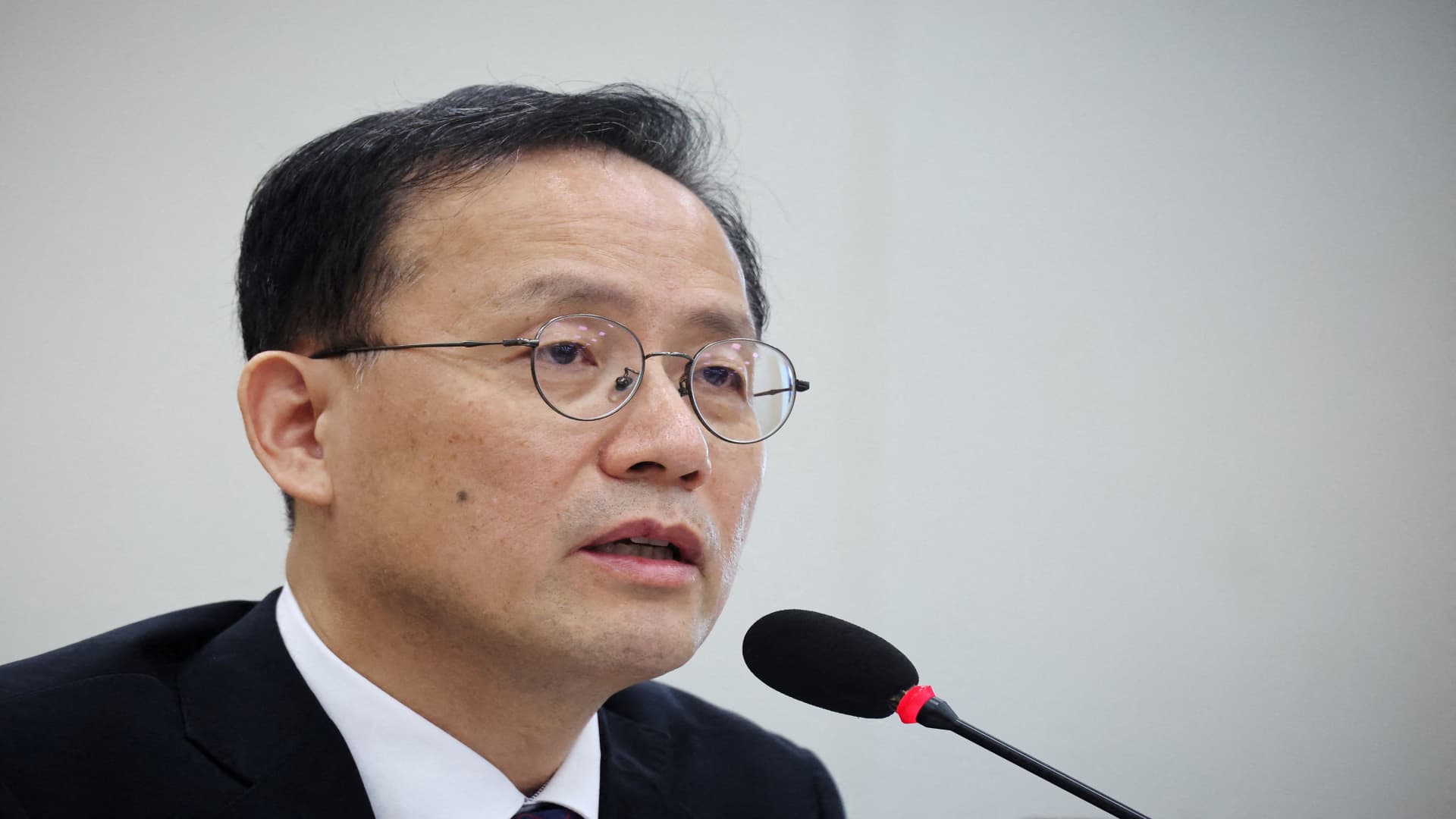
South Korea’s semiconductor outlook through 2027 remains positive in Finance Minister Lee Hyoung-Il’s view, even after a sharp sell-off in chip stocks. Lee said October 17 that demand still exceeded supply by a wide margin, a condition he believes can support industry growth through next year.
For investors, the key distinction is that this is Lee’s assessment, not a guaranteed industry forecast. Official trade data does show strong recent chip-export growth, but it does not independently establish his global demand-and-supply outlook.
Why Lee expects chip growth through 2027
Speaking to CNBC on the sidelines of the International Monetary Fund and World Bank annual meetings in Bangkok, Lee said semiconductor supply was still being expanded but had not caught up with demand. He said that imbalance could sustain the current growth cycle at least through 2027.
The forecast follows a week in which semiconductor shares fell amid investor concerns about potential interest-rate increases and rising competition from Chinese companies, CNBC reported. The sell-off included South Korean names such as SK Hynix and Seoul Semiconductor, as well as Nvidia in the United States.
Lee said the chip industry’s large role in South Korea’s economy has also contributed to swings in the country’s stock market. He nevertheless described the broader economy as solid and said the chip upswing should lift tax collections above the government’s earlier expectations.
What do South Korea’s export figures show?
South Korea’s Ministry of Trade, Industry and Resources reported that first-quarter semiconductor exports rose 139% from a year earlier to $78.5 billion. The ministry attributed the increase to more investment in AI servers and elevated memory prices.
Within that total, DRAM exports rose 249.1% to $35.8 billion, NAND exports climbed 377.5% to $5.4 billion, and system-semiconductor exports increased 13.5% to $12.1 billion, according to the ministry.
More recent preliminary customs figures, reported by Al Jazeera, showed September chip shipments up more than 260% year over year to $60.3 billion. Total South Korean exports rose 83.5% to a monthly record of $120.9 billion in the same month.
Those figures support the picture of strong recent demand. They also sit alongside risks identified by the trade ministry, including global supply-chain instability and uncertainty around U.S. tariffs.
The longer-term supply risk
The near-term view through 2027 differs from a longer-term warning about the memory market. CNBC reported that a Maeil Business Newspaper opinion column cited two experts who expected a flood of new semiconductor supply could create oversupply in memory chips by 2029.
That warning was presented in an opinion column, not as an official forecast. It highlights the central uncertainty for the sector: rapid capacity expansion can eventually narrow the shortage that Lee cited as support for continued growth.
This story draws on original reporting from CNBC.