Timberland investing draws institutions despite weak wood prices
Bank of America says institutions are buying about 1 million acres a year, while timber owners warn of long holding periods and operating risks.
By Theo Nakamura · Staff Writer
· 3 min read
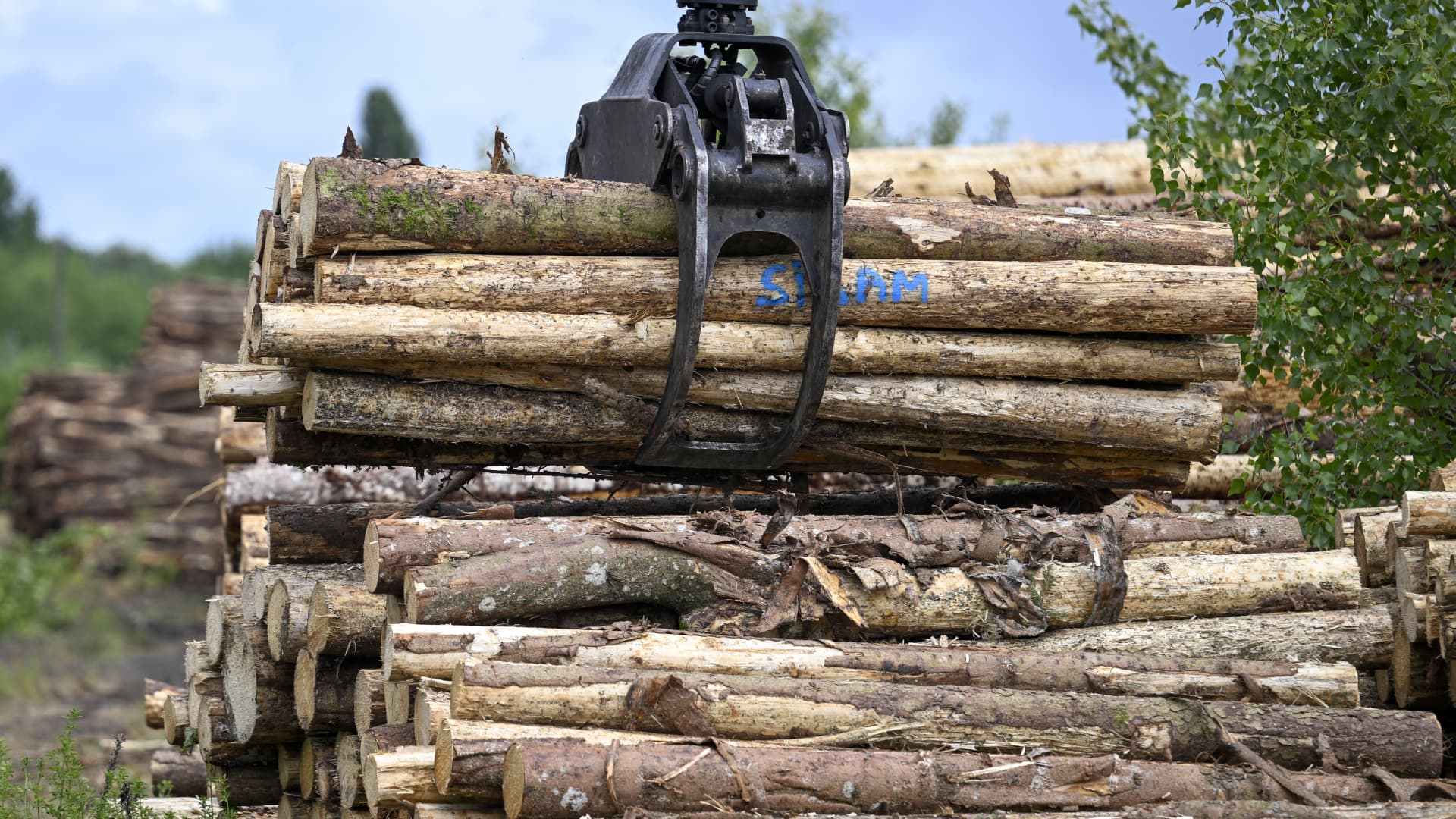
Timberland investing is attracting institutional buyers even as prices for several wood products remain under pressure. Bank of America, as reported by CNBC, says institutions have bought timberland at a pace of roughly 1 million acres a year, a trend its 2026 outlook expects to continue. For individual investors, the key distinction is that this is a long-horizon ownership strategy, not a quick way to bet on lumber prices.
According to the bank's figures, timberland managers bought 55% of the acreage that changed hands in 2025 and sold 15%. Large managers often invest on behalf of pension funds and endowments, whose long time frames can stretch across decades.
Why are institutions buying U.S. timberland?
Ken Shepard, head of specialty asset management at Bank of America Private Bank, told CNBC that the bank views timberland as a strategic long-term asset rather than one investors can readily enter and exit with changing market conditions. The bank's rationale includes growth in the U.S. South timber industry, demand for wood products outside conventional construction, bioenergy wood-pellet demand, and recreational and lifestyle demand for land.
Those factors are part of Bank of America's investment case, rather than guarantees of future returns. Timberland can potentially generate income from harvesting trees, while the underlying land can gain or lose value separately. Demand for recreation and lifestyle properties may support land values beyond timber-harvest income, according to the bank.
The National Council of Real Estate Investment Fiduciaries' Timberland Property Index returned 0.95% in the second quarter of 2026, CNBC reported. That consisted of 0.34% income and 0.61% appreciation. The index covers privately held U.S. timber properties owned at least partly for institutional investors, so it is not a measure of a publicly traded timber stock or of every forest property.
What are the risks of timberland investing?
Recent pricing illustrates why the investment thesis requires patience. CNBC reported that the Bureau of Labor Statistics' producer price index for logs, bolts, timber, pulpwood and wood chips rose in September but has mostly declined since summer 2022. That index tracks what producers receive for wood products, not timberland values or total investor returns.
Pat Dorn, founder of Anchor Investment Management and a South Carolina timberland owner, told CNBC that timber supply exceeds demand in a sluggish housing market. He characterized current returns as low and said he had curtailed his own timber investments.
Regional data also show that wood-product prices do not move together. South Carolina Forestry Commission data cited by CNBC showed average pine pulpwood stumpage, the price paid to a landowner for standing trees, fell from $5.67 a ton in the third quarter of 2025 to $3.79 a year later. Pine sawtimber fell from $22.78 to $21.47 a ton, while hardwood sawtimber rose from $16.04 to $22.52.
Holding periods can be lengthy. Dorn said trees grown for pulpwood may take 12 to 14 years to mature, while timber used in home construction can take about 25 years. Owners also must handle hunting activity, illegal logging, wildfires, pests, disease and changes in land values, CNBC reported. That makes direct timberland ownership a managed, illiquid asset rather than a passive holding.
This story draws on original reporting from CNBC.