Trump-Xi meeting shows how China’s self-sufficiency push shifts leverage
China’s domestic chip drive, export reach and rare-earth position may limit U.S. pressure, though Beijing still faces serious economic strains.
By Maya Okafor · Markets Writer
· 3 min read
The May Trump-Xi meeting produced no publicly evident major agreements on trade, technology or the Iran war, according to the Atlantic Council. For investors following the trump xi meeting china self sufficiency debate, the bigger takeaway is the bargaining position behind the talks: Beijing is trying to reduce the damage that U.S. technology restrictions can inflict, even if doing so carries costs.
That does not make China economically self-reliant or immune to pressure. It does mean export controls, which limit access to strategic U.S. technology, may be less able to force broad concessions if Chinese officials are prepared to accept weaker domestic alternatives while they build their own capacity.
How does China’s self-sufficiency push affect Trump-Xi talks?
Kenton Thibaut of the Atlantic Council said China appears willing to bear short-term costs to gain longer-term protection from U.S. chokepoints in semiconductor technology. The assessment came amid reports that roughly 10 Chinese technology companies had been cleared to purchase Nvidia H200 chips. Thibaut said those sales might still not happen because Beijing is promoting homegrown technology, including products that may be less capable than U.S. chips.
That strategy changes the time frame for negotiations. Restrictions can still slow access to advanced components, but China’s willingness to substitute domestic products could reduce the immediate leverage available to Washington. Thibaut also said Beijing’s tolerance of current restrictions partly rests on an expectation that the U.S. will avoid sudden, sweeping moves that would severely disrupt China’s AI and chip sectors.
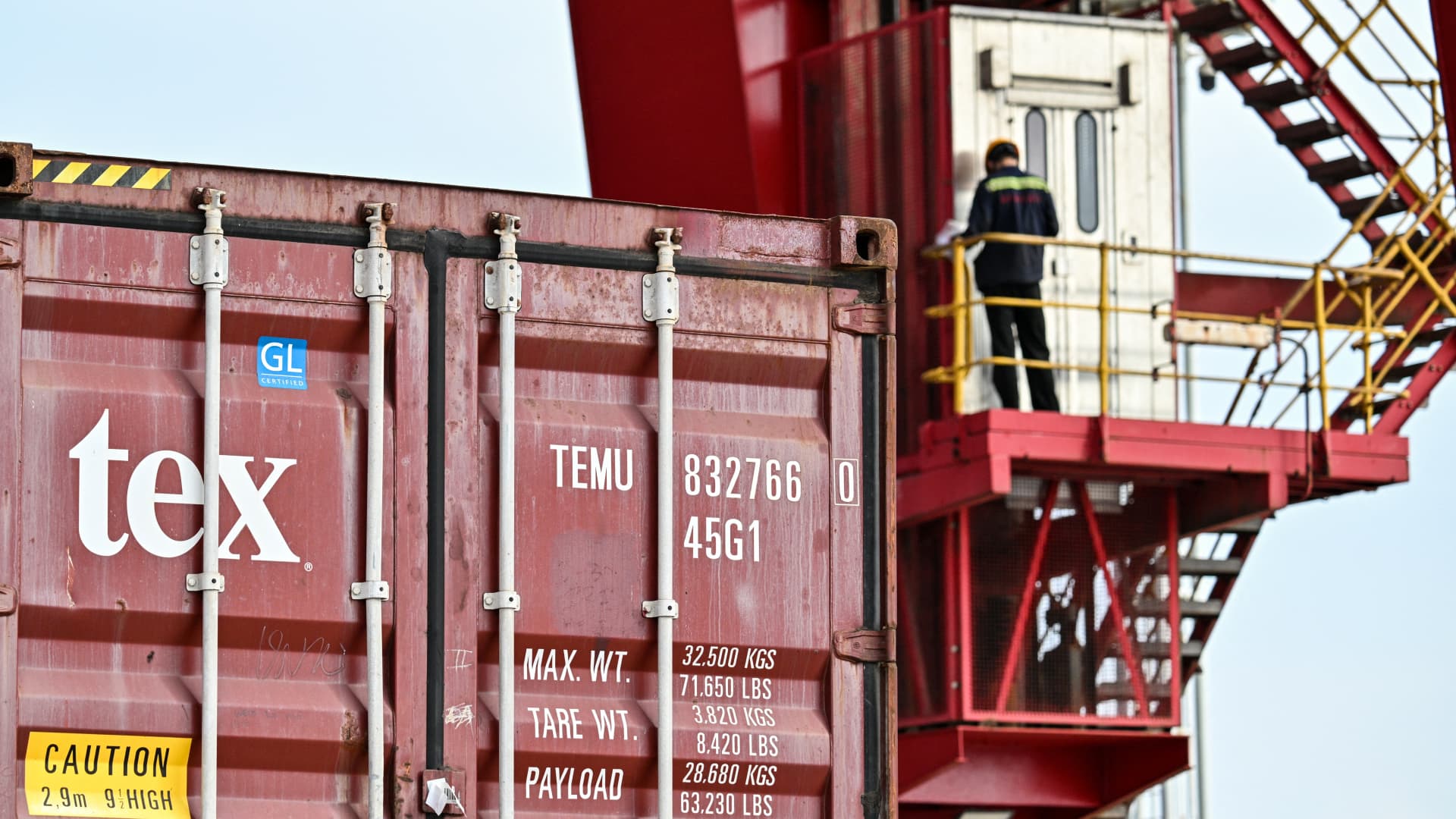
Trade and supply chains add to Beijing’s position. CNBC reported that China’s global trade surplus hit a record $1.2 trillion in 2025, even as its exports to the U.S. declined. The same reporting said China has expanded trade ties around the world and retains a pressure point through rare-earth supply, materials used in products including electronics and industrial equipment.
Jens Eskelund, president of the European Chamber of Commerce in China, told CNBC that China reached 40% of global container exports in the summer of 2026, earlier than he had expected. He estimated that one-half to three-quarters of container traffic from China to Southeast Asia subsequently moves on to other destinations. Those routes can make supply chains less visibly China-dependent without necessarily removing Chinese manufacturing from them.
What leverage does the United States still have?
The U.S. retains important strengths in advanced technology and alliances. A 2025 Lowy Institute comparison cited by CNBC gave U.S. defense networks a score of 81.4 out of 100, compared with 18.9 for China. But coordinated pressure depends on partners joining it. Ryan Hass of the Brookings Institution told CNBC that U.S. leverage requires a united front, while fewer countries appear willing to follow Washington’s lead.
China also has meaningful weaknesses. CNBC reported that Goldman Sachs economist Hui Shan said Chinese home prices had fallen 30% over six years, while weak labor markets and declining rents were likely to extend the property slump in many areas. Industrial robot output rose 34.6% year over year in August, according to CNBC, but smartphone output fell 22.3%. The outlet also cited MERICS data showing loss-making companies made up 24% of China’s industrial firms in 2025.
The evidence available does not include an official joint statement or a formal policy document setting out China’s self-sufficiency targets. It supports a narrower conclusion: both countries have tools to impose costs, while China’s domestic technology push and global trade reach make a limited truce or managed friction more plausible than a quick overhaul of the economic relationship. The Atlantic Council reported that further Trump-Xi meetings were scheduled for September, November and December.
This story draws on original reporting from CNBC.