France wine production 2026 warning puts growers under pressure
France’s agriculture ministry warns wine output could approach a 70-year low in 2026 as heat and drought sharpen growers’ adaptation choices.
By Priya Nair · Economy Reporter
· 3 min read
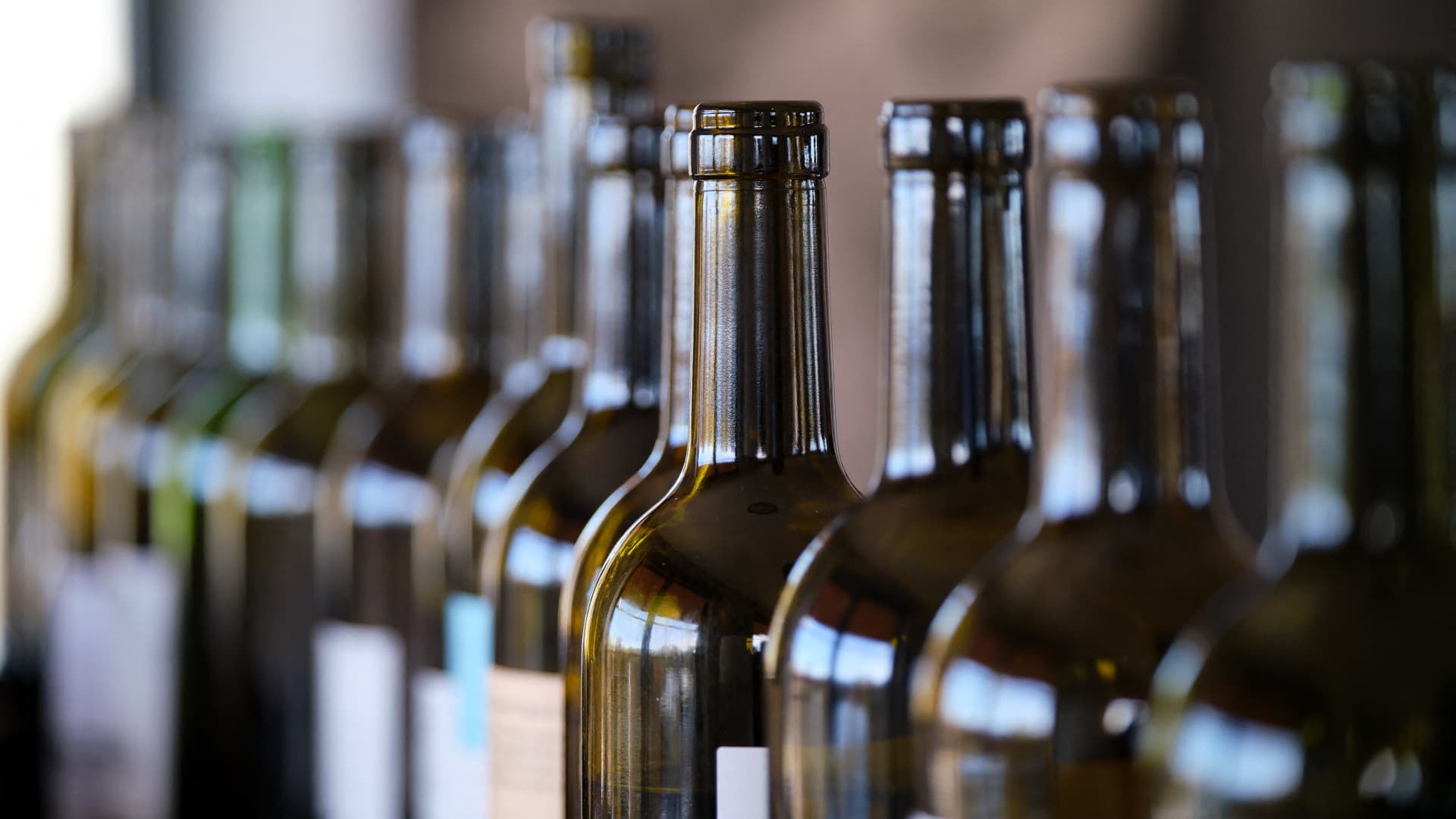
France wine production 2026 could fall to a 70-year low, according to a warning from the agriculture ministry reported by CNBC. For investors watching climate-sensitive industries, the immediate point is clear: another weak harvest would add pressure to producers already weighing investment needs, staffing challenges and strict production rules.
The warning is a projection, rather than a final harvest result. CNBC reported that 2026 would be France’s third consecutive year of reduced wine output, after a record-hot summer and severe drought affected vineyards.
The effect has not been uniform. CNBC said the Loire Valley and Champagne were among the hardest-hit areas, while growers in Bordeaux and Languedoc-Roussillon reported harvests above the previous year’s level. Jean-Marie Cardebat, chair of wines and spirits at INSEEC Grande École and an economics professor at the University of Bordeaux, told CNBC that the 2023 vintage was decent but yields have otherwise been poor since the start of the decade.
Why is France wine production falling in 2026?
Heat and drought are the immediate pressures identified in CNBC’s reporting. Cardebat said no French region is safe from heatwaves and argued that France has been poorly prepared for climate change. He contrasted France with Spain, which he said has an irrigation network, while irrigation remains rare in France and is allowed only in exceptional cases.
Hotter conditions also bring forward the harvest, narrowing the time estates have to line up workers and equipment. Florent Latour, head of Burgundy producer Maison Louis Latour, told CNBC that his estate began harvesting on Aug. 14, its earliest start. He said the midpoint of its harvest has shifted three days earlier each decade, or roughly a month since the 1930s.
Latour said the harder problem is planning for a harvest whose timing can change, leaving estates needing to assemble vineyard teams on very short notice. He said Maison Louis Latour settled for about half a harvest after waiting for more rain.
Rules, investment and public aid
Climate pressure has also revived debate over France’s appellation, or AOC, rules. CNBC reported that Château Lafleur withdrew its six wines from the Pomerol and wider Bordeaux designations last year. The Guinaudeau family, which owns the estate, said restrictions involving irrigation, planting density and permitted grape varieties limited its ability to respond quickly to changing conditions.
That decision reflects one estate’s stated rationale, not a sector-wide response. Cardebat described a difficult financial cycle: climate disruption leaves producers with less capacity to invest even as they need more spending on adaptation. He also said larger estates may be better positioned to absorb the costs of people, equipment and facilities.
France’s government announced an emergency package worth more than €1 billion at the end of the summer for farmers and winegrowers affected by heatwaves, CNBC reported. The announcement offers near-term support, while the questions around vineyard practices, staffing and investment remain longer-term.
What is still unknown
The available reporting does not provide the ministry’s projected production volume, its forecasting methodology or the specific historical comparison behind the 70-year-low warning. It also does not establish how much individual producers will spend to adapt or whether regulatory changes will follow.
Readers can review CNBC’s reporting on the ministry warning and vineyard responses.
This story draws on original reporting from CNBC.